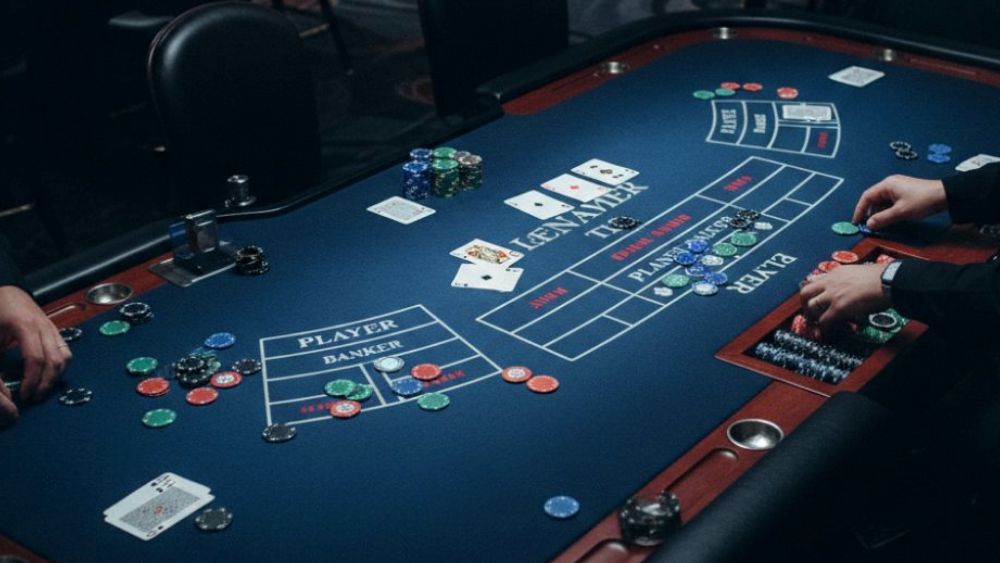
Why Lucky 9 Is a Filipino Casino Staple
If you've spent any time in a Philippine casino or online casino, you've likely seen Lucky 9 tables buzzing with action. Also known as Nueve or Nines, this game is a cousin of baccarat but with a unique Filipino twist. The rules are simple enough for beginners, yet the fast pace and strategic drawing phase keep seasoned players coming back. Lucky 9 is especially popular in land-based casinos like Solaire and Resorts World Manila, and it's now a staple in online casinos catering to Filipino players. The game's appeal lies in its blend of chance and decision-making: you get to choose whether to draw a third card, adding a layer of strategy absent from pure baccarat. Whether you're playing for fun or aiming for real money, understanding the core rules is your first step to enjoying the game responsibly.
1. Card Values and the Goal of the Game
Lucky 9 is played with a standard 52-card deck, and the objective is to get a hand total as close to 9 as possible. Card values are straightforward:
- Aces count as 1 point.
- Number cards 2 through 9 are worth their face value.
- 10s and face cards (Jacks, Queens, Kings) are worth 0 points.
When you add up your two cards, if the total exceeds 9, you drop the tens digit. For example, a 7 and an 8 total 15, which becomes 5 (15 minus 10). A 10 and a 9 total 9 (10 counts as 0, plus 9 equals 9). The perfect hand is a total of 9, hence the name Lucky 9. The second-best hand is an 8, and so on. If you're familiar with baccarat, this should feel familiar, but the drawing rules differ significantly.
2. The Deal: Two Cards to Start
At the start of each round, the dealer gives two cards face up to the Player and two cards face down to the Banker. In some versions, both hands are dealt face down and then revealed after the draw phase. The Player acts first, examining their two cards to decide whether to draw a third. The Banker's decision follows, often based on a fixed set of rules. This initial deal sets the stage for the strategic choice that defines Lucky 9.
3. The Player's Draw Decision
This is where Lucky 9 diverges from baccarat. After receiving two cards, the Player must decide whether to draw a third card. The decision is usually based on the total of their first two cards. Common guidelines suggest:
- If the total is 0 to 4, drawing a third card is recommended.
- If the total is 5, it's a borderline decision—some players draw, others stand.
- If the total is 6, 7, 8, or 9, the Player should stand.
However, these are not hard rules; the Player can choose to draw or stand regardless of their total. This element of choice adds a psychological layer—you're not just relying on luck but also on your read of the game. Many experienced players stick to the recommended strategy, while beginners might draw more aggressively. In online Lucky 9, the software often enforces these guidelines automatically, but in live dealer games, you make the call.
4. The Banker's Draw Rules
Once the Player has acted, it's the Banker's turn. The Banker's decision to draw a third card is typically governed by a fixed set of rules, similar to baccarat. While variations exist, a common rule set is:
- If the Banker's total is 0 to 4, they draw a third card.
- If the total is 5, they draw if the Player's third card is 4, 5, 6, or 7; otherwise, they stand.
- If the total is 6, they draw if the Player's third card is 6 or 7; otherwise, they stand.
- If the total is 7, 8, or 9, they stand.
These rules are designed to standardize the game and reduce the house edge. As a player, you don't control the Banker's actions—they follow the predetermined strategy. Knowing these rules helps you anticipate the Banker's move and understand the odds.
5. Comparing Hands and Determining the Winner
After both the Player and Banker have completed their draws, the hands are compared. The hand with a total closest to 9 wins. If both hands have the same total, it's a tie. Payouts vary depending on the bet:
- Player bet wins: pays 1:1 (even money).
- Banker bet wins: pays 1:1, but often with a 5% commission, similar to baccarat. Some Lucky 9 variants pay 1:1 without commission but adjust other rules.
- Tie bet: pays 8:1 or 9:1, depending on the casino.
In some versions, a tie results in a push (bet returned) for Player and Banker bets. Always check the specific rules of the table you're playing, especially in online casinos where variations are common.
6. Betting Options and Payouts
Lucky 9 offers three main betting options: Player, Banker, and Tie. The Player bet is straightforward—you're betting that the Player's hand will win. The Banker bet is on the Banker's hand. The Tie bet is a long shot, but it can be tempting with its high payout. In most Philippine casinos, the Banker bet comes with a 5% commission on winning bets, which reduces the payout slightly. However, some online casinos offer no-commission versions where a Banker win with a total of 6 pays only 0.5:1. It's crucial to read the table rules before betting. Additionally, some tables offer side bets like Player Pair or Banker Pair, which pay if the first two cards form a pair. These side bets have a higher house edge but can add excitement.
7. Strategy and House Edge
Lucky 9 is largely a game of chance, but the Player's draw decision introduces a strategic element. The optimal strategy is to follow the recommended drawing guidelines, which minimize the house edge. The house edge for the Banker bet is typically around 1.2% to 1.5% (after commission), while the Player bet has a house edge of about 1.5% to 2%. The Tie bet has a much higher house edge, often exceeding 10%. Therefore, seasoned players usually stick to Banker or Player bets. However, because the Player's drawing decision is not always forced, some players try to exploit patterns or use betting systems like Martingale. These systems don't change the underlying odds and can lead to significant losses. The best approach is to set a budget, stick to it, and enjoy the game as entertainment. Remember, Lucky 9 is a negative expectation game—the house always has an edge. Play responsibly and never chase losses.
Frequently Asked Questions
What is the best hand in Lucky 9?
The best hand is a total of 9, which is the highest possible score. A total of 8 is the second-best hand.
Does Lucky 9 have a strategy?
Yes, the main strategy is in the Player's decision to draw a third card. Following the recommended drawing rules (draw on 0-4, stand on 6-9) is the optimal strategy. Banker decisions are fixed.
Is Lucky 9 the same as baccarat?
They are similar, but Lucky 9 gives the Player a choice to draw a third card, while in baccarat, the drawing rules are fixed for both Player and Banker. Also, card values and some payouts differ.
Can I play Lucky 9 for real money online in the Philippines?
Yes, many online casinos licensed by PAGCOR offer Lucky 9. Always choose a reputable site and play responsibly.