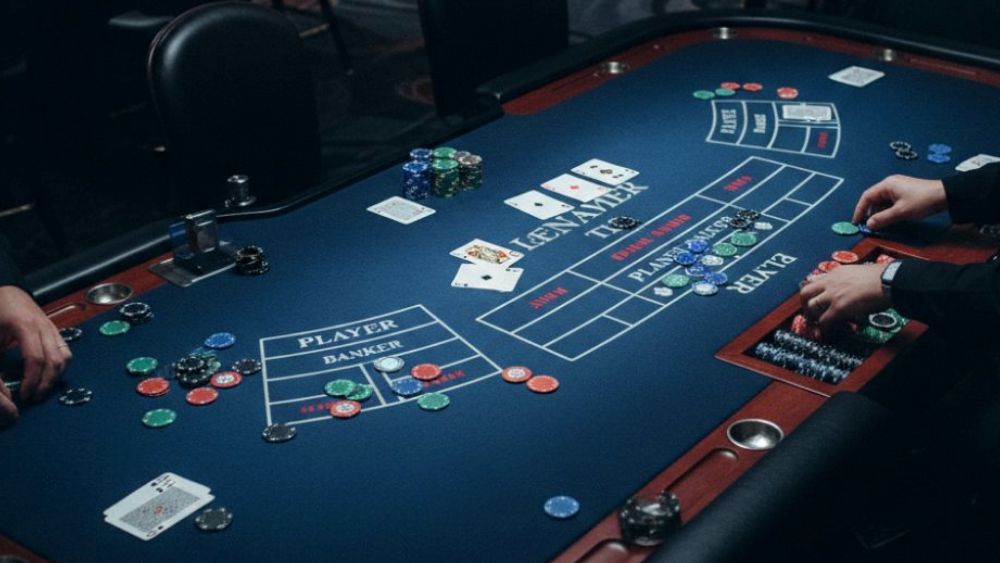
Why Baccarat Is a Favorite Among Filipino Casino Goers
If you've ever stepped into a casino in Metro Manila or fired up an online casino site, you've probably seen baccarat tables buzzing with activity. It's one of the most popular games in the Philippines, and for good reason: it's easy to learn, offers relatively low house edges, and has a certain glamour that attracts both high rollers and casual players.
But while the rules are simple, many beginners jump in without understanding the basic strategy that can stretch their bankroll and improve their odds. That's where this guide comes in. We'll walk you through the fundamentals of baccarat strategy, from choosing the right bets to managing your money wisely. By the end, you'll have a solid foundation to play confidently—whether you're at a land-based casino in Entertainment City or playing on a mobile app.
Before we dive in, let's clarify one thing: baccarat is a game of chance, not skill. No strategy can guarantee a win. However, using smart tactics can help you minimize losses and make your playing time more enjoyable. So, let's get started.
Baccarat Basics: A Quick Refresher
If you're completely new to baccarat, here's a quick rundown. The game is played with six to eight decks of cards. Two hands are dealt: the Player and the Banker. Your goal is to bet on which hand will have a total closest to 9. You can also bet on a Tie.
Card values are straightforward: Aces count as 1, cards 2 through 9 are face value, and 10s and face cards count as 0. If the total exceeds 9, you drop the tens digit. For example, a 7 and a 6 total 13, which becomes 3.
Each hand starts with two cards. Depending on the total, a third card may be drawn according to fixed rules. You don't need to memorize these rules—the dealer handles it. What matters for strategy is where you place your bet.
There are three main bets:
- Player bet: Pays 1:1, but typically comes with a 5% commission on wins (in some variations, no commission but different odds).
- Banker bet: Pays 1:1 minus 5% commission. Despite the commission, this is statistically the best bet.
- Tie bet: Pays 8:1 or 9:1, but has a high house edge.
Understanding these options is the first step in developing your strategy.
The Banker Bet: Your Best Friend in Baccarat
If you ask any seasoned baccarat player about the best bet, they'll almost always say the Banker. Why? Because the Banker bet has a lower house edge than the Player bet. On average, the house edge for the Banker bet is about 1.06%, while the Player bet is around 1.24%. The Tie bet, on the other hand, has a hefty house edge of about 14.36%.
But wait—isn't the Banker bet subject to a 5% commission? Yes, but even with that commission, it still offers better odds. Let's do a quick comparison:
- Banker bet: house edge 1.06%
- Player bet: house edge 1.24%
- Tie bet: house edge 14.36%
So, if you want to maximize your chances, stick with the Banker bet most of the time. Some players alternate between Banker and Player based on patterns, but the math favors Banker consistently.
However, don't ignore the Player bet entirely. In some casinos, especially online, the commission structure might differ. Always check the rules. But as a general rule, Banker is the safer choice.
“The Banker bet is the only bet in baccarat that gives you a realistic shot at long-term profitability, even if it's small.” — a seasoned baccarat dealer from Solaire
Betting Systems: Do They Really Work?
Many beginners get excited about betting systems like Martingale, Fibonacci, or Paroli, hoping to beat the house. These systems involve increasing or decreasing your bets based on previous outcomes. While they can be fun and add structure to your play, they don't change the underlying odds. Baccarat is a game of independent events; each hand is random.
Let's look at the Martingale system, for example. You double your bet after every loss, so when you eventually win, you recover your losses and make a small profit. The problem? Table limits and bankroll constraints. A losing streak can quickly wipe out your funds. Plus, the house edge remains the same.
That said, using a system can help you manage your bets and avoid impulsive decisions. Just don't expect it to turn the tables in your favor. If you decide to use one, set strict limits and stick to them.
Some players prefer flat betting—betting the same amount every hand. This is a low-risk approach that keeps you in the game longer. Others use a percentage of their bankroll. Whichever you choose, discipline is key.
Reading the Scoreboard: Patterns and Trends
In land-based casinos, you'll often see a scoreboard displaying past results—Banker, Player, or Tie. Some players swear by pattern recognition, looking for streaks or alternating sequences. For instance, if Banker has won five times in a row, they might bet on Player, assuming a correction is due.
But here's the truth: baccarat hands are independent. The cards have no memory. A streak of Banker wins doesn't make a Player win more likely. This is known as the gambler's fallacy. So, while reading the scoreboard can be entertaining, it shouldn't be the basis of your strategy.
That said, some players use the scoreboard to decide when to increase bets during a streak. If you're on a winning streak, riding it can be profitable—but only if you have the discipline to walk away when it ends. Never chase losses based on patterns.
Money Management: The Real Secret to Baccarat Strategy
No matter how well you understand the odds, poor money management can ruin your session. Here are some practical tips for Filipino players:
- Set a budget: Decide how much you're willing to lose before you start. Never play with money you can't afford to lose.
- Divide your bankroll: Split your budget into smaller units, like 10 or 20 bets. This helps you avoid going broke quickly.
- Set win/loss limits: Decide in advance how much you want to win and how much you're willing to lose. Walk away when you hit either limit.
- Avoid chasing losses: It's tempting to increase bets to recover losses, but this often leads to bigger losses. Stick to your plan.
- Take breaks: Baccarat can be fast-paced. Take regular breaks to clear your head and avoid fatigue-driven decisions.
Remember, baccarat is entertainment. Treat it as such, and you'll enjoy it more.
Online vs. Land-Based Baccarat: Strategy Differences
With the rise of online casinos in the Philippines, many players now enjoy baccarat from their homes. Online baccarat offers convenience, but it also requires adjustments to your strategy.
First, the speed of the game. Online baccarat can be faster, with less time between hands. This can lead to more impulsive betting. Set a timer or limit the number of hands you play per session.
Second, the availability of statistics. Many online platforms provide detailed hand histories and trends. Use these to inform your bets, but don't over-rely on them.
Third, bonuses and promotions. Online casinos often offer bonuses that can boost your bankroll. However, read the terms carefully—wagering requirements can be steep.
Finally, the social aspect. Land-based baccarat is often a social game, with players chatting and cheering. Online, it's more solitary. If you miss the interaction, consider live dealer baccarat, which streams real dealers and allows chat.
Common Mistakes to Avoid as a Beginner
Even with a solid strategy, beginners often fall into traps. Here are some common mistakes:
- Betting on Tie: The high payout is tempting, but the odds are terrible. Avoid it unless you're just playing for fun.
- Ignoring the commission: Some players forget that Banker wins incur a 5% commission. Factor this into your calculations.
- Overcomplicating the game: Baccarat is simple. Don't try to apply complex systems from other games like blackjack.
- Playing without a plan: Walking in without a budget or strategy is a recipe for disaster.
- Letting emotions drive decisions: Frustration or excitement can lead to bad bets. Stay calm and stick to your plan.
Avoid these pitfalls, and you'll be ahead of most beginners.
Final Thoughts: Play Smart, Play for Fun
Baccarat strategy doesn't have to be complicated. Focus on the Banker bet, manage your money wisely, and avoid the Tie bet. Don't rely on patterns or betting systems to guarantee wins—they can't. Instead, use them as tools to structure your play and keep emotions in check.
Whether you're playing at a casino in Manila or on your phone, remember that baccarat is a game of chance. The house always has an edge, but with smart bets, you can minimize it and extend your playtime. And that's what it's all about—enjoying the thrill of the game responsibly.
So, next time you sit at a baccarat table, you'll know exactly what to do. Good luck, and play smart!
Frequently Asked Questions
Is baccarat a game of skill or chance?
Baccarat is primarily a game of chance. While strategy can help you make better bets, the outcome of each hand is random. No skill can predict which hand will win.
What is the best bet in baccarat?
The Banker bet is statistically the best, with a house edge of about 1.06%. The Player bet is close behind at 1.24%, while the Tie bet has a high house edge of around 14.36%.
Can I use betting systems like Martingale in baccarat?
Yes, you can, but they don't change the odds. Betting systems can help manage your bets, but they can also lead to big losses if you hit a losing streak. Use them with caution and set limits.
How much should I budget for a baccarat session?
Set a budget you're comfortable losing. A common rule is to allocate no more than 5-10% of your total gambling bankroll for a single session. Never chase losses.